

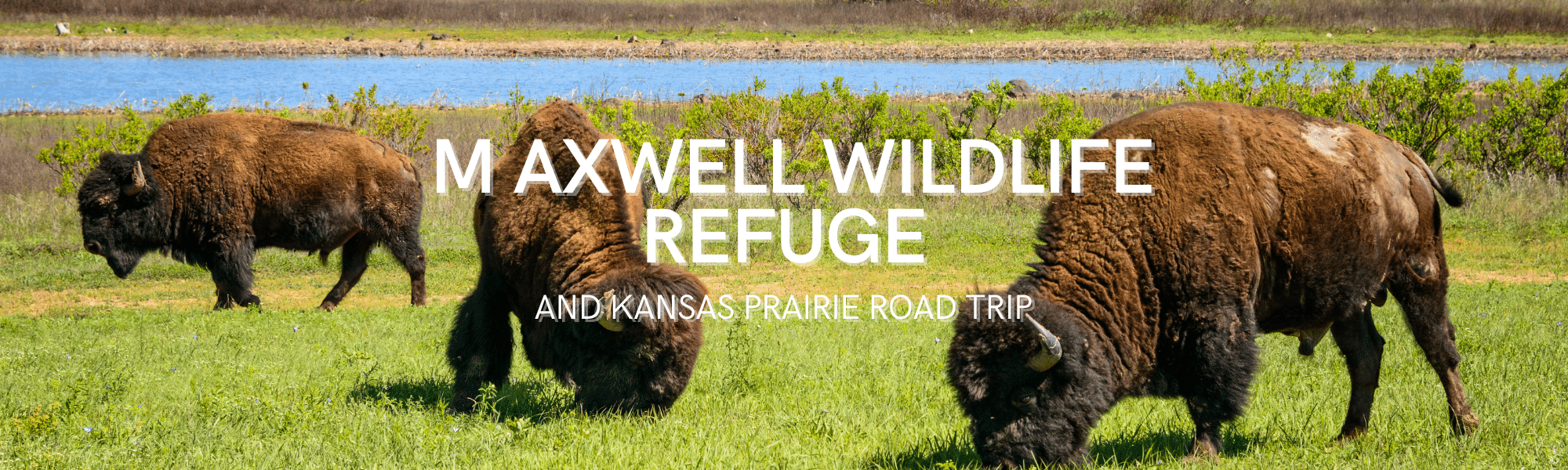
Maxwell Wildlife Refuge and Kansas Prairie Road Trip
Imagine driving through the rolling Kansas prairie, surrounded by wide-open grasslands where bison and elk roam freely. That’s what makes Maxwell Wildlife Refuge such a special place to visit.
Located in central Kansas, Maxwell Wildlife Refuge protects more than 2,500 acres of native prairie and offers visitors the opportunity to see wildlife in its natural surroundings. It’s a great destination for anyone who enjoys nature, birdwatching, and getting away from the busier tourist attractions.
During our six-day Kansas road trip, we made our way to Maxwell Wildlife Refuge after visiting Cheyenne Bottoms and Quivira National Wildlife Refuge.
We followed the Prairie Trail Scenic Byway from Sterling, stopping at Maxwell Wildlife Refuge, McPherson State Fishing Lake, and Marion Reservoir. Each offered something different, from the prairie wildlife at Maxwell to the peaceful surroundings of McPherson State Fishing Lake and the expansive waters of Marion Reservoir.
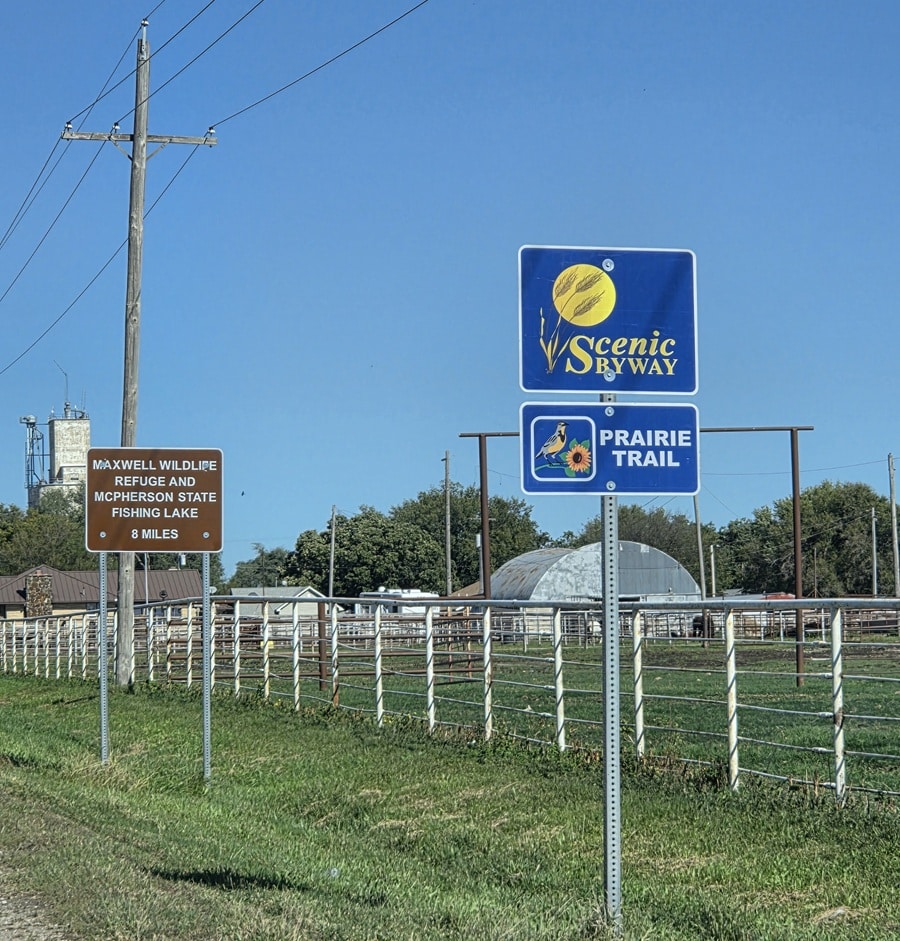
Although birdwatching was a big part of our Kansas trip, this day was more about enjoying the outdoors, appreciating the scenery, and spending time surrounded by nature. If you’re planning a Kansas prairie road trip, here’s what you can expect when visiting Maxwell Wildlife Refuge and these nearby destinations.
Disclaimer: This post may include affiliate links. If you click one of them, I may receive a small commission at no extra cost to you.
Driving the Prairie Trail Scenic Byway in Kansas
The Prairie Trail Scenic Byway is an approximately 80-mile route through central Kansas, connecting Canton with Ellsworth and passing through prairie landscapes, rolling hills, and small communities. The byway includes Maxwell Wildlife Refuge, near Canton, and continues through areas around Roxbury, Lindsborg, Marquette, and Kanopolis.
It’s a wonderful way to experience the Kansas landscape beyond the main highways. We drove from Sterling toward Maxwell Wildlife Refuge, enjoying the countryside along the way.
One of the things I appreciated about this part of Kansas was the amount of open space. You could drive for miles surrounded by grasslands, agricultural fields, and gently rolling hills. For anyone who enjoys nature and wildlife, the drive itself is part of the experience. You don’t have to rush between destinations. Keep an eye out for birds along the roadsides, stop at viewpoints when it’s safe, and enjoy the scenery.
How Far Is Maxwell Wildlife Refuge From Wichita?
Maxwell Wildlife Refuge is located approximately 60 miles north of Wichita, making it an easy destination to include in a longer visit to central Kansas. If you’re starting your trip in Wichita, you can visit Maxwell Wildlife Refuge as a day trip or combine it with nearby McPherson State Fishing Lake and Marion Reservoir.
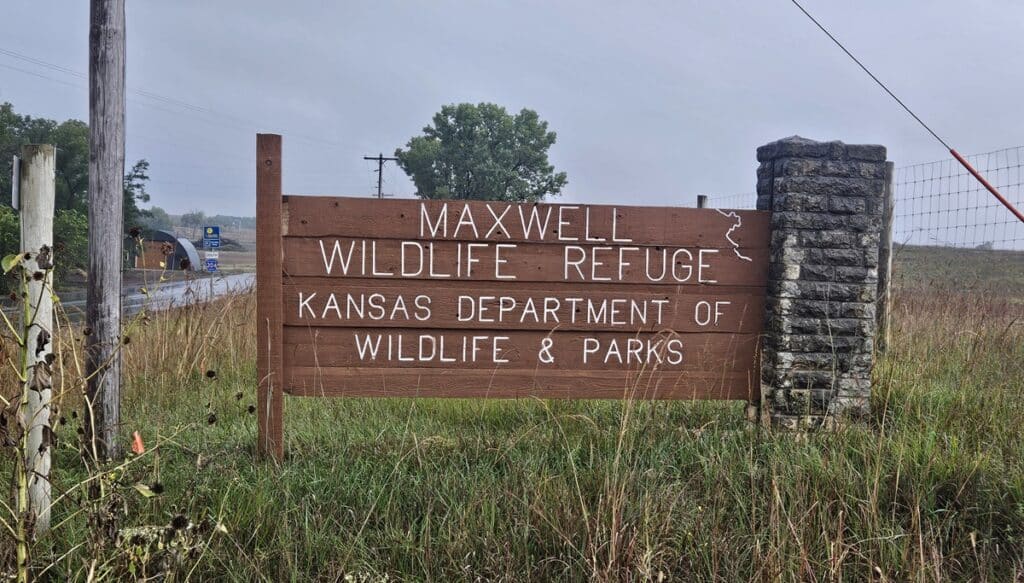
Maxwell Wildlife Refuge Kansas
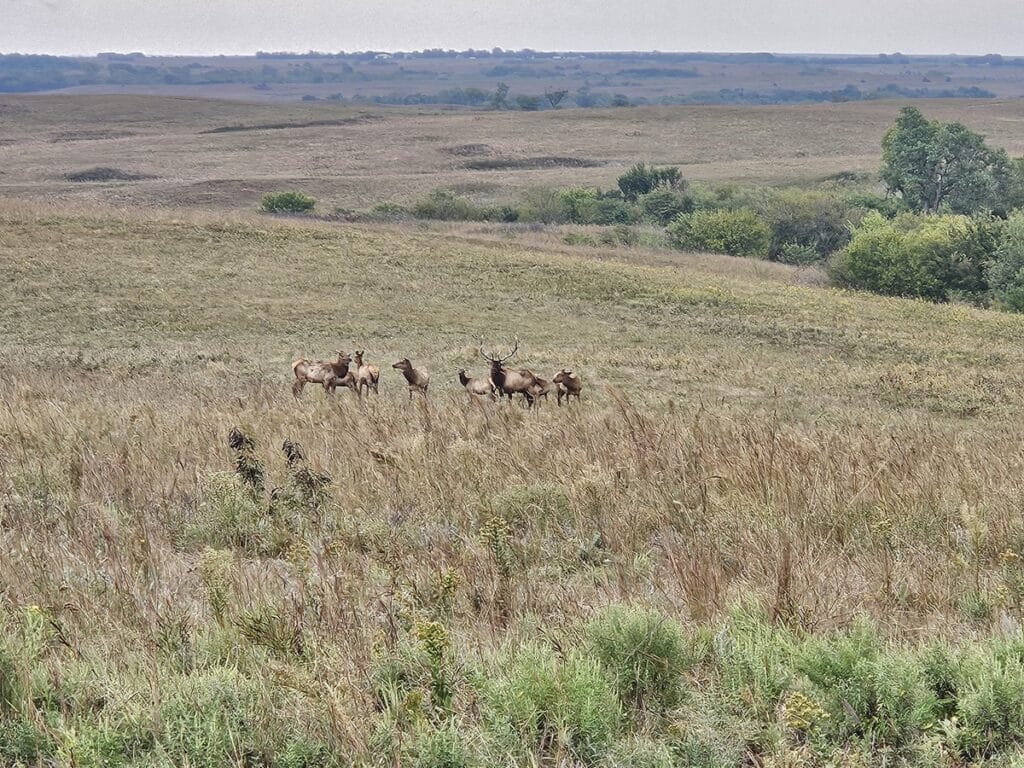
Established in 1944, Maxwell Wildlife Refuge provides an opportunity to see animals that were once common across the Great Plains in a natural prairie environment. The landscape includes rolling hills, native grasses, wildflowers, and scattered shrubs.
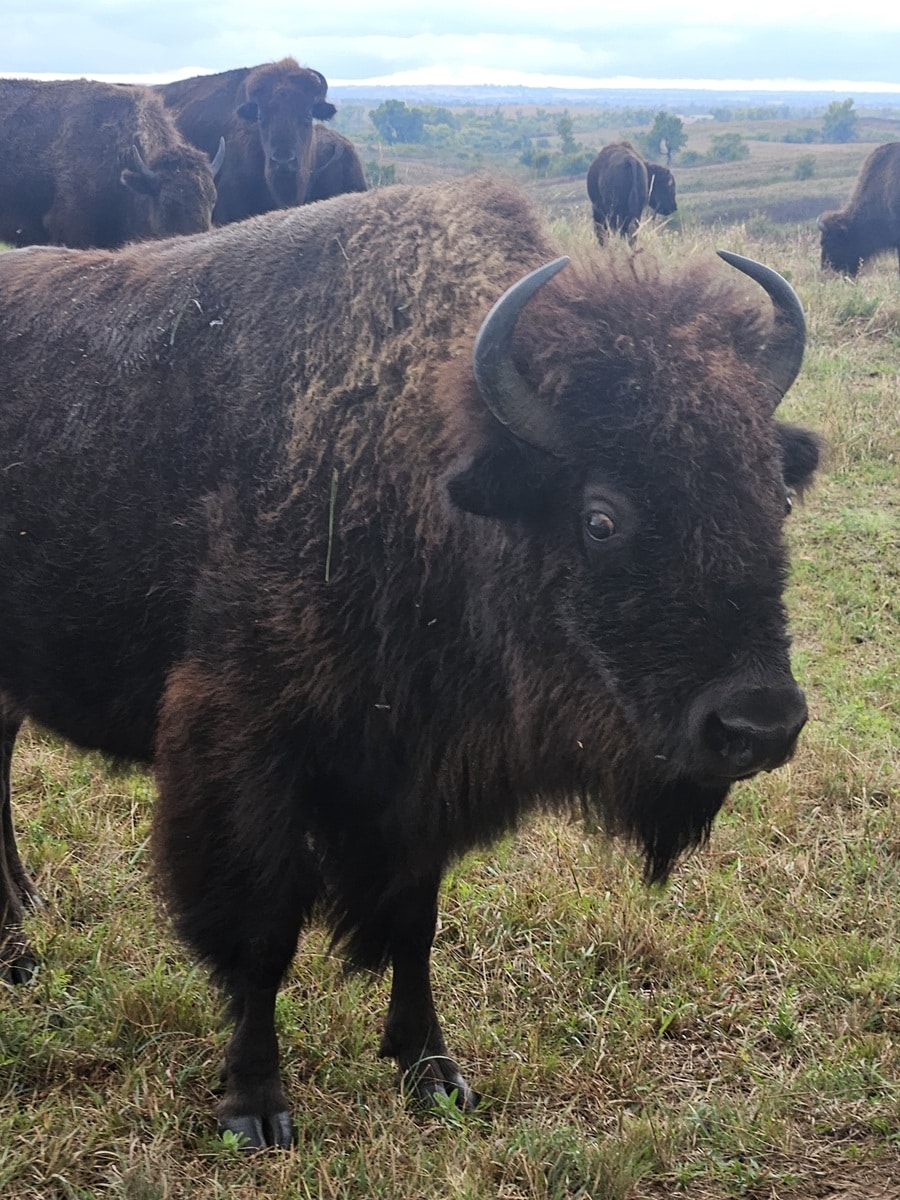
Bison are the main attraction at Maxwell Wildlife Refuge. These large animals once roamed the Great Plains in enormous numbers and played an important role in maintaining the prairie ecosystem.
Today, Maxwell helps protect the native prairie landscape while providing habitat for its bison and elk herds. The refuge is also home to a variety of birds and smaller wildlife. The surrounding grasslands provide opportunities to see species such as Eastern Meadowlarks, sparrows, hawks, and other prairie birds.
During our visit to Maxwell and nearby McPherson State Fishing Lake, we identified 18 different bird species.
Some of the birds we recorded included:
- Ring-necked Pheasant
- Eastern Meadowlark
- Eastern Bluebird
- Red-tailed Hawk
- Merlin
- Northern Flicker
- Red-bellied Woodpecker
- Downy Woodpecker
- Carolina Wren
- Yellow-rumped Warbler
We also saw Franklin’s Gulls, Great Blue Herons, Turkey Vultures, and several other species.
Although this part of our trip wasn’t entirely focused on birdwatching, it was still rewarding to see a variety of birds while enjoying the prairie. If you are interested in birdwatching in Kansas, the grasslands around Maxwell Wildlife Refuge are worth spending time in.
Maxwell Wildlife Refuge Tram Tour
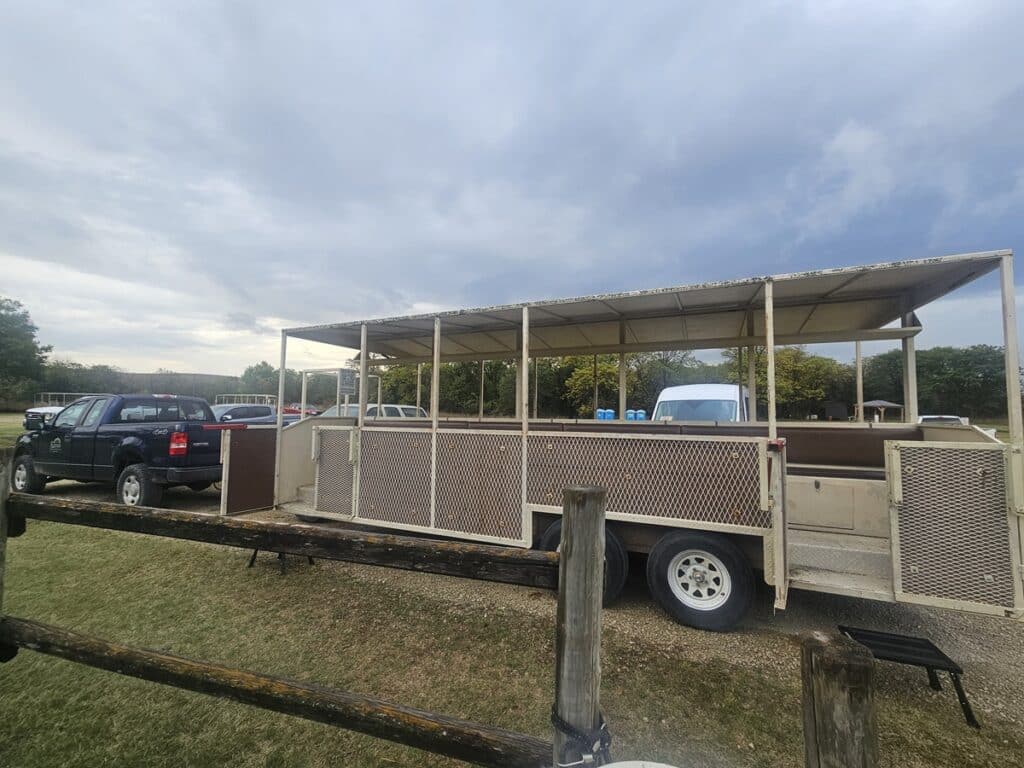
One of the best ways to experience Maxwell Wildlife Refuge is through a guided tram tour. These tours take visitors into the prairie, providing an opportunity to observe bison in their natural surroundings while learning about the refuge and its conservation efforts.
The covered tram is accompanied by a guide who shares information about the animals, prairie habitat, and history of the area. Tours generally last approximately 45 minutes.
Public tours are typically offered on select days, with additional tours sometimes available depending on demand. Reservations are required, and private group tours may also be available. Because tour schedules and prices can change, I recommend checking availability before planning your visit. You can find current tour information and make reservations through the Maxwell Wildlife Refuge official website.
McPherson State Fishing Lake
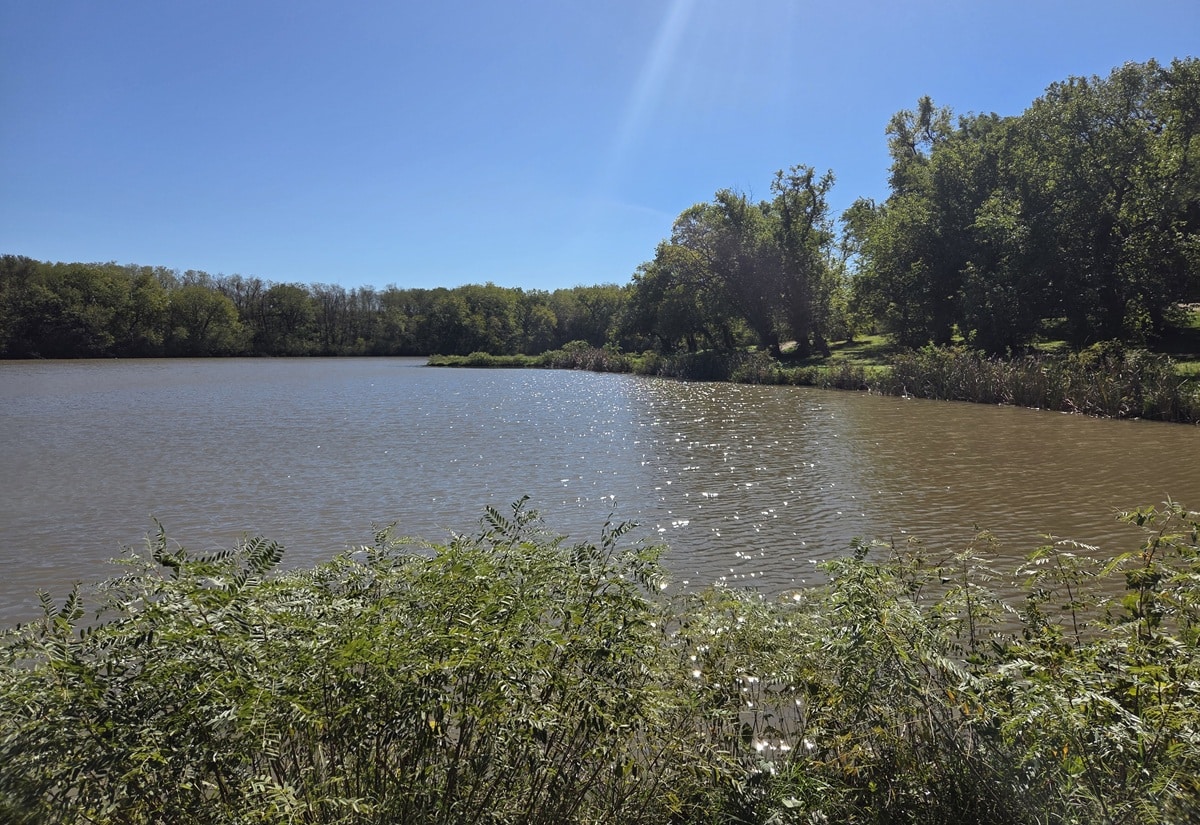
After Maxwell Wildlife Refuge, we visited McPherson State Fishing Lake, located just past the Refuge. This was one of those places where the peaceful setting was just as enjoyable as the wildlife. The lake is relatively small, covering approximately 46 acres, and is surrounded by trees, grasslands, and gently rolling terrain.
Compared with the larger wetlands and reservoirs we’d visited during our Kansas trip, McPherson State Fishing Lake felt particularly calm. It was a lovely place to spend some time outdoors, enjoy the water, and appreciate the quiet surroundings.
What to Do at McPherson State Fishing Lake
Fishing is one of the main activities, with species including channel catfish, largemouth bass, crappie, and bluegill. Facilities include fishing piers, a boat ramp, picnic areas, restrooms, and camping areas along the western shoreline.
There’s also a short nature trail of approximately three-quarters of a mile that follows Gypsum Creek. The trail provides an opportunity to walk through the surrounding habitat and look for birds and other wildlife. You don’t have to be interested in fishing to enjoy this lake.
Waterbirds may be found around the shoreline, while woodpeckers, songbirds, and raptors can be seen in the surrounding habitat. If you enjoy birdwatching, it’s worth bringing your binoculars and spending time looking around the lake and wooded areas. Even if you don’t see large numbers of birds, it’s a wonderful place to enjoy nature.
For us, it was about the calmness of the water, the natural surroundings, and having time to appreciate a quieter part of Kansas.
Marion Reservoir Kansa
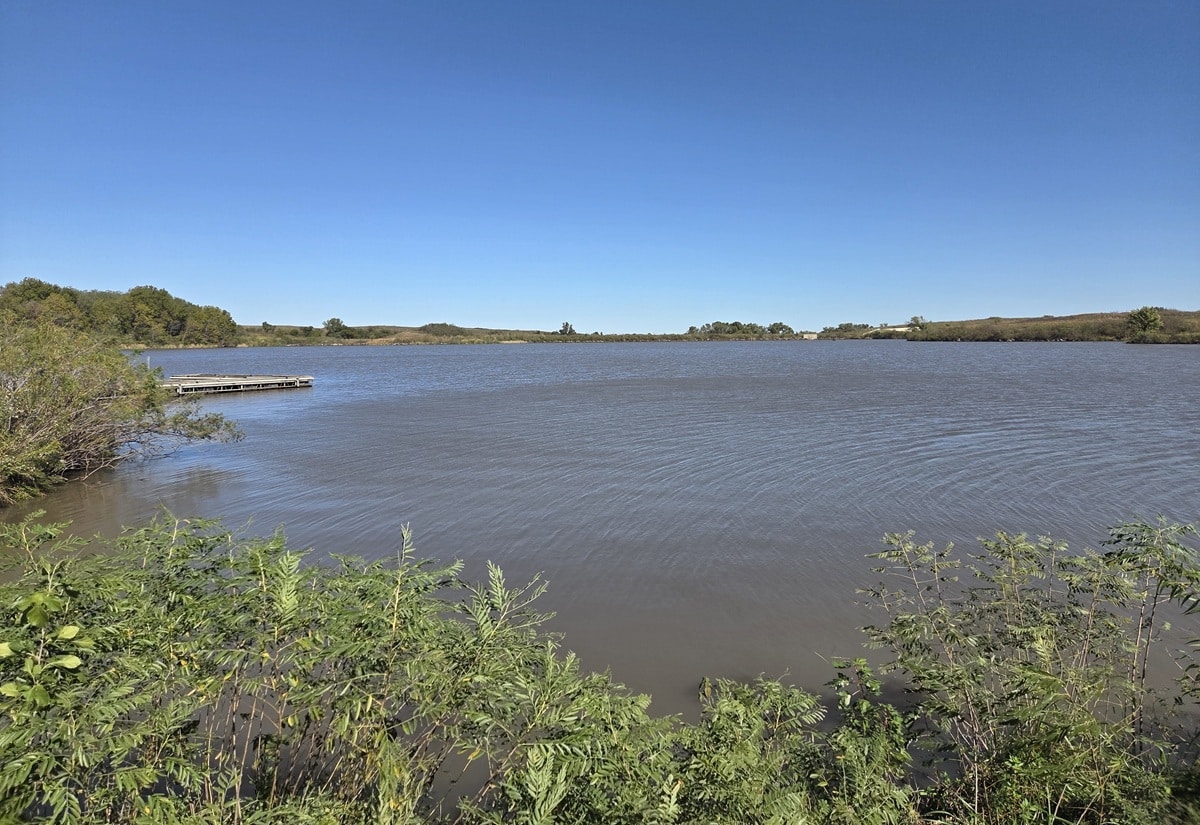
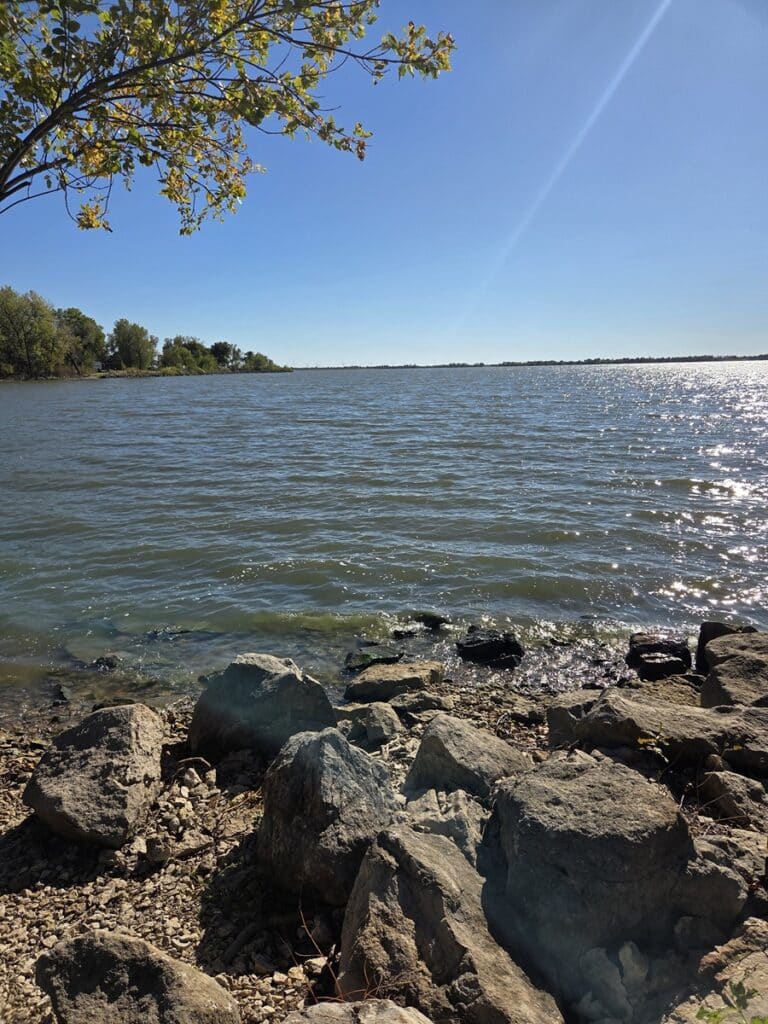
Our next stop was Marion Reservoir, located near the communities of Marion and Hillsboro in central Kansas. After the quiet surroundings of McPherson State Fishing Lake, Marion Reservoir felt enormous!
The reservoir covers approximately 6,200 acres of water and is surrounded by another 6,000 acres of public land. Managed by the U.S. Army Corps of Engineers, it was completed in 1968 and provides opportunities for camping, fishing, boating, wildlife watching, and other outdoor activities.
The size of the reservoir was impressive, and we enjoyed spending time around the water and taking in the surrounding scenery.
Marion Reservoir Camping and Outdoor Activities
Marion Reservoir is a popular destination for camping and outdoor recreation.
There are four main developed camping areas around the reservoir.
- Cottonwood Point
- Hillsboro Cove
- Marion Cove
- French Creek Cove
Facilities vary by campground, with options that can include electrical hookups, showers, picnic areas, boat ramps, and swimming areas. Cottonwood Point also has the Willow Walk Nature Trail, an approximately one-mile trail that offers another opportunity to enjoy the outdoors. If you’re planning a longer visit, camping would be a great way to spend more time around the lake.
There are also opportunities for fishing and boating, with anglers targeting species such as walleye, crappie, white bass, and catfish.
Birdwatching at Marion Reservoir
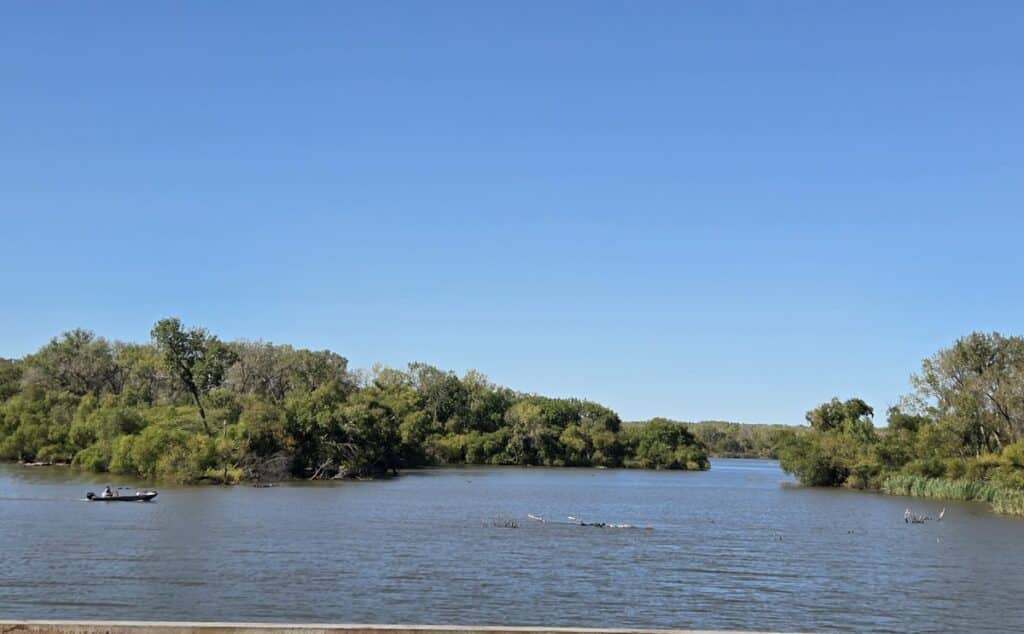
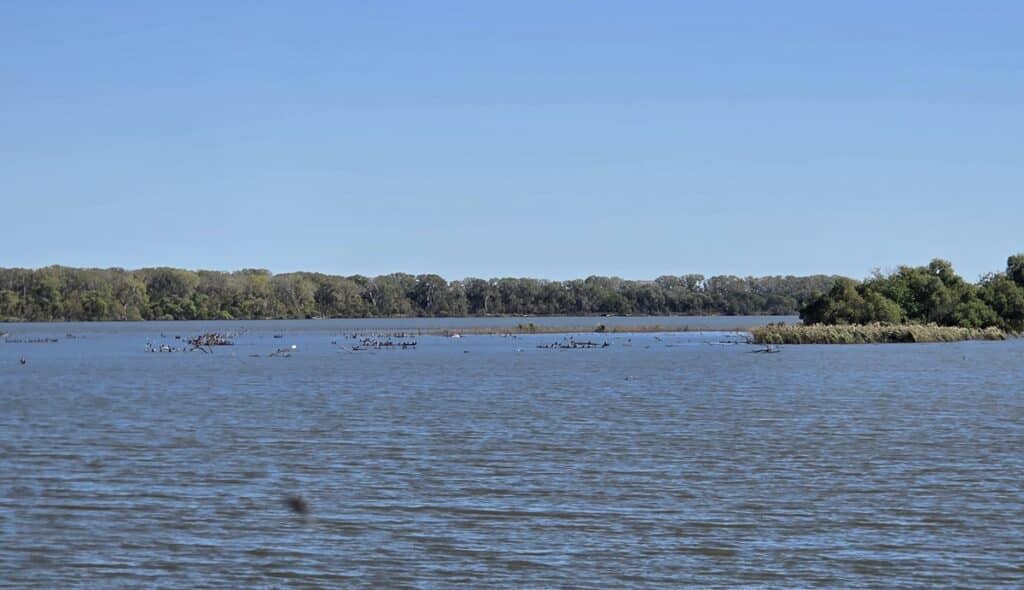
Although we weren’t visiting Marion Reservoir specifically for birdwatching, we still found several species around the water. During our visit, we saw a few species, including at least 150 Double-crested Cormorants which is my favorite bird so I loved seeing them!
With so much open water and surrounding habitat, Marion Reservoir offers plenty of potential for birdwatching throughout the year. Depending on the season, visitors may see waterfowl, gulls, pelicans, shorebirds, and birds of prey.
Spring and fall migration can be especially interesting for birdwatchers, although the birds present will depend on weather and migration conditions. For us, Marion Reservoir was more about enjoying the lake and the area than trying to identify as many species as possible. It was another wonderful stop on our Kansas road trip.
Visiting Cottonwood Falls & the Flint Hills
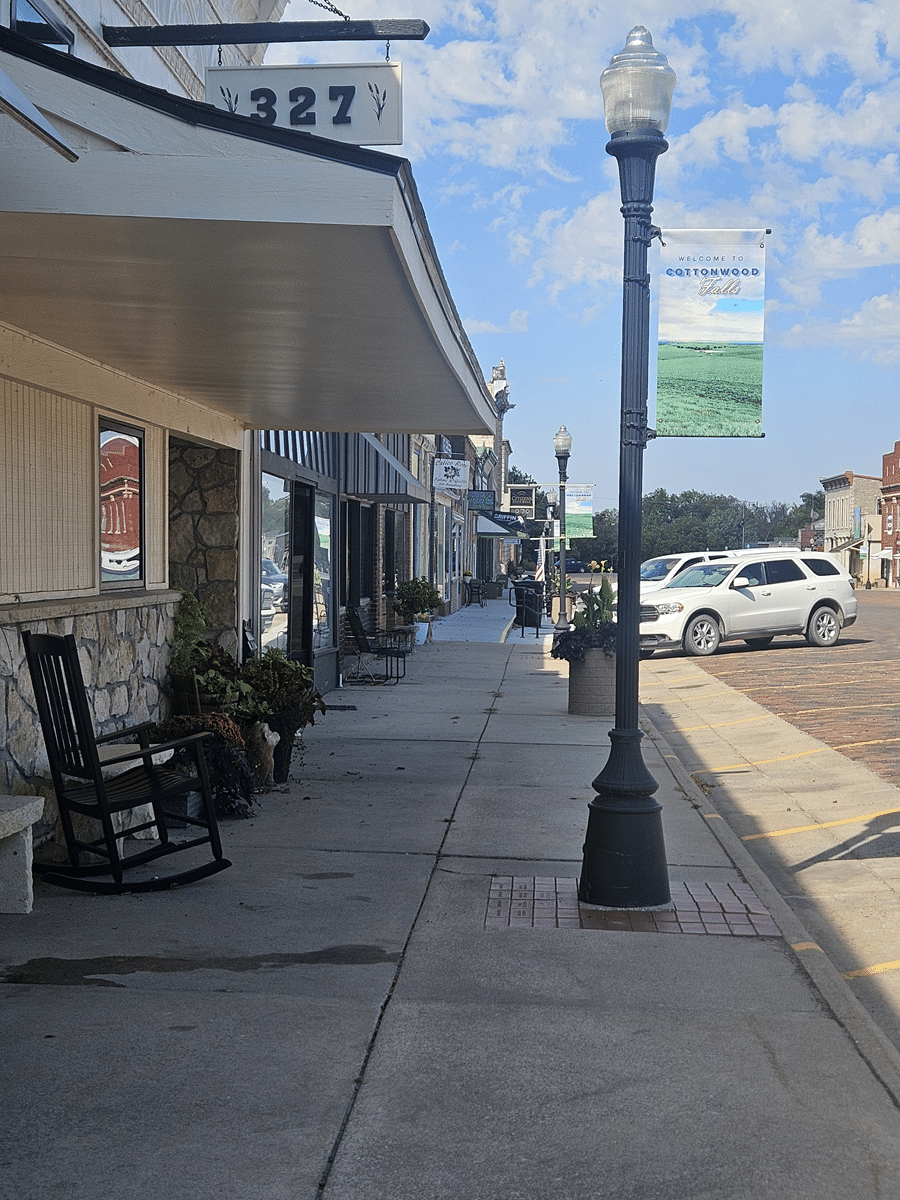
After visiting Maxwell Wildlife Refuge, McPherson State Fishing Lake, and Marion Reservoir, we continued to Cottonwood Falls, a charming small town in the Kansas Flint Hills. We love visiting smaller towns when we travel, and Cottonwood Falls is a great place to experience the local atmosphere while enjoying the surrounding countryside.
During our visit, we stopped at The Doghouse Saloon, a casual local bar where we enjoyed spending some time and getting a feel for the community. It’s worth stopping in if you enjoy visiting local establishments rather than sticking to the usual tourist attractions.
Cottonwood Falls is also a great base for visiting Tallgrass Prairie National Preserve and other attractions in the Flint Hills.
Where to Stay Near Cottonwood Falls
We stayed at Den Creek Ranch, a 46-acre property surrounded by prairie, trees, and open countryside. We absolutely loved the Western Bunkhouse, with its rustic western character and comfortable accommodations. After spending the day outdoors, it was a wonderful place to relax.
One of our favorite parts was being able to wander around the property, enjoy the natural surroundings, and get ourselves into a little fun trouble along the way. Just remember one thing when walking around a working ranch. Watch out for the cow patties!
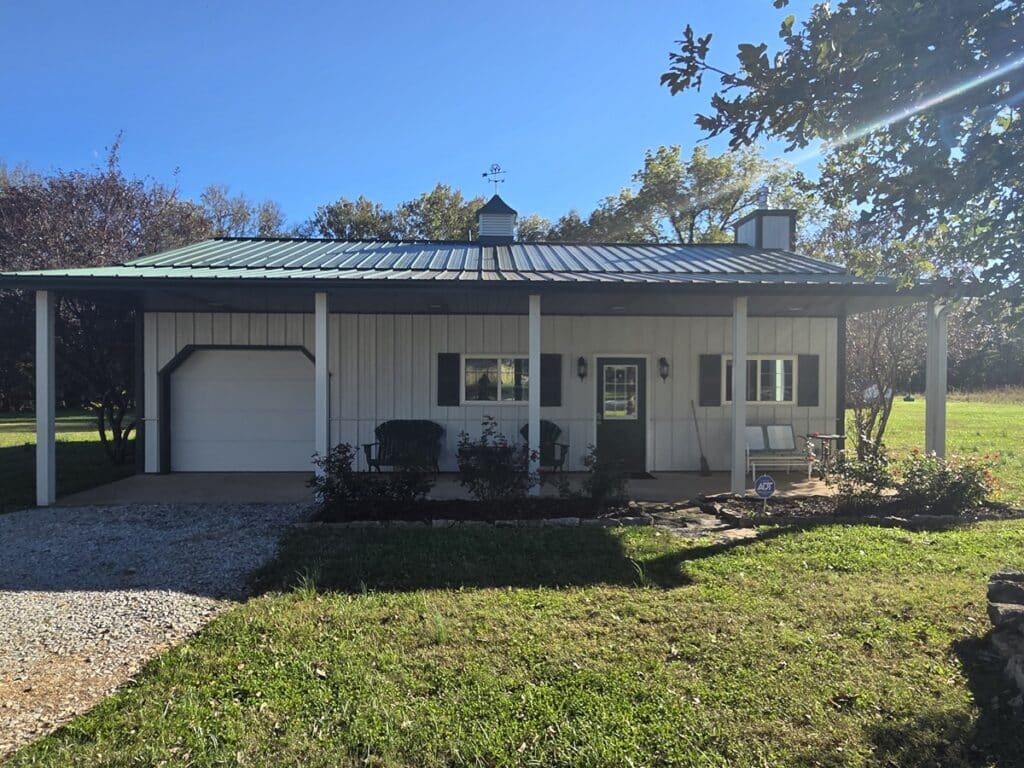
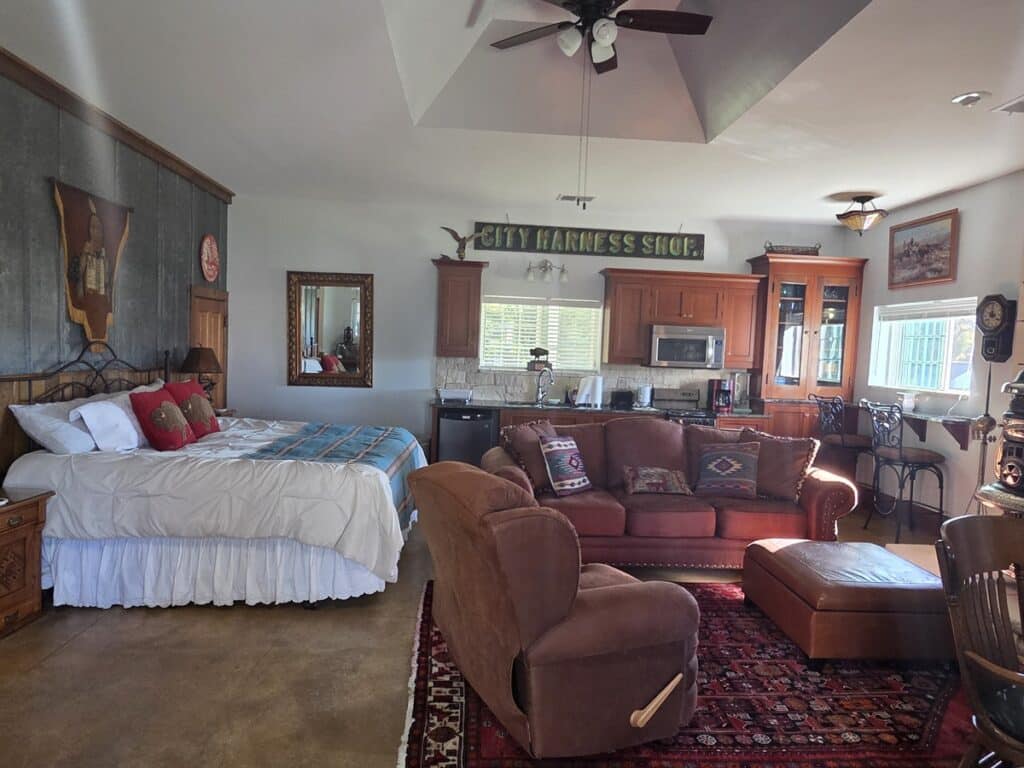
Another accommodation I’d recommend is Clover Cliff Ranch near Elmdale, Kansas. I’ve stayed there on a previous visit and really enjoyed the historic property and peaceful countryside setting. Both properties offer a different experience from a typical hotel and are wonderful options for enjoying the Kansas Flint Hills.


Frequently Asked Questions
Final Thoughts
This part of our Kansas road trip was a wonderful change of pace from the busy birdwatching days we’d spent at Cheyenne Bottoms and Quivira. We loved experiencing the prairie around Maxwell Wildlife Refuge, the peaceful setting of McPherson State Fishing Lake, and the wide-open water at Marion Reservoir.
Although we didn’t see as many birds, it was just as enjoyable to spend time outdoors and appreciate the natural surroundings. Ending our day in Cottonwood Falls and staying at Den Creek Ranch made the experience even more memorable.
If you enjoy wildlife, scenic drives, and small-town experiences, Maxwell Wildlife Refuge and these nearby Kansas destinations are well worth adding to your road trip.
If you enjoyed my post, follow me on social media or subscribe to my newsletter below so you can stay connected on future posts, trips, tips, and more.
